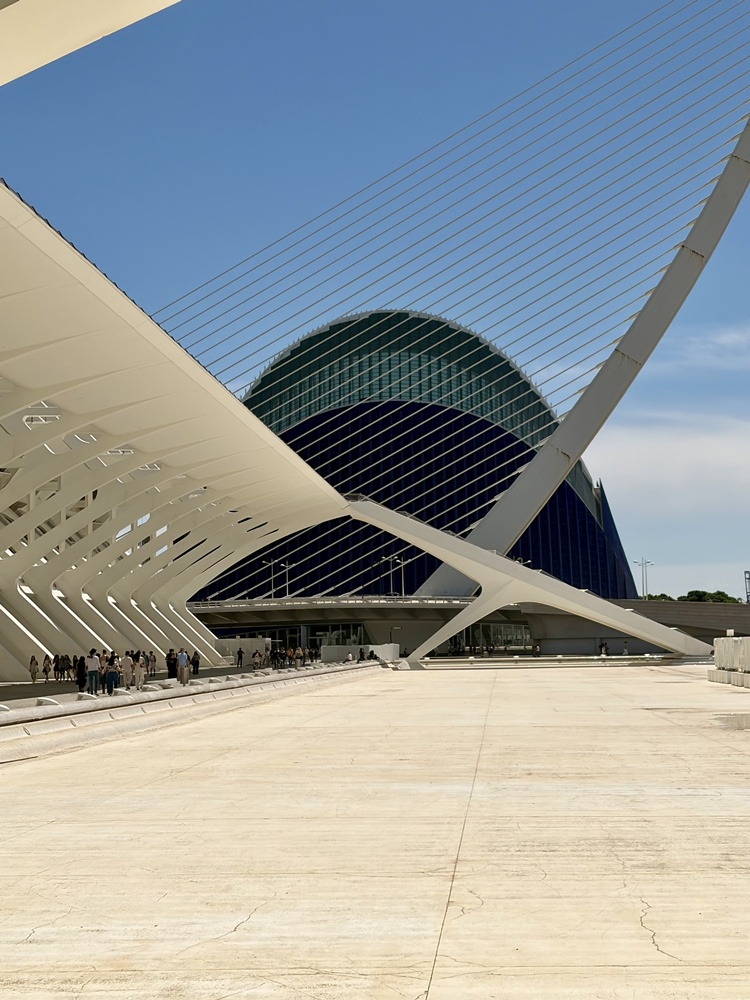
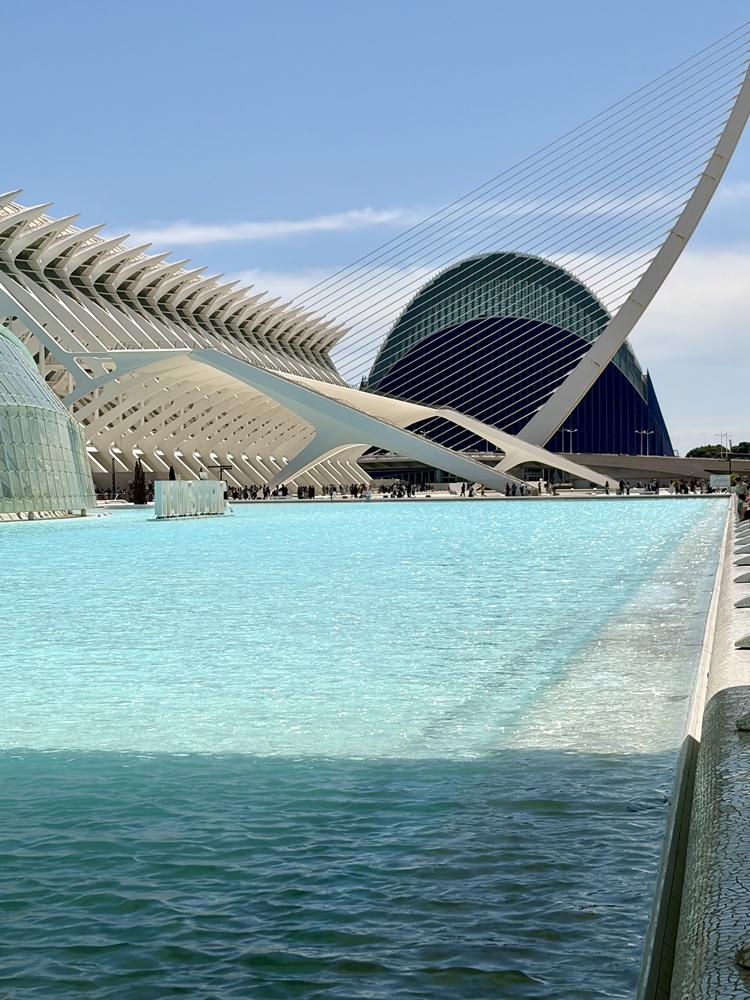
City of Arts and Sciences in Valencia
one of the most impressive architectural and cultural complexes in Spain. Located in the former riverbed of the Turia in Valencia

one of the most impressive architectural and cultural complexes in Spain. Located in the former riverbed of the Turia in Valencia

The City of Arts and Sciences in Valencia, known in Spanish as Ciudad de las Artes y las Ciencias and in Valencian as Ciutat de les Arts i les Ciències, is one of Europe’s most extraordinary architectural, cultural and scientific complexes.
Its futuristic buildings, extensive reflecting pools, interactive museums, Europe’s largest aquarium and internationally renowned opera house make it one of Valencia’s most important tourist attractions.
Designed primarily by Spanish architects Santiago Calatrava and Félix Candela, the complex stretches for approximately two kilometres along the former riverbed of the Turia River.
Whether you are planning a weekend city break, a family holiday or an extended stay on Spain’s Mediterranean coast, you should allow at least half a day to explore the complex. Ideally, visitors should dedicate one or two full days to discovering its main attractions.
| Information | Details |
|---|---|
| Spanish name | Ciudad de las Artes y las Ciencias |
| Valencian name | Ciutat de les Arts i les Ciències |
| Location | Former Turia riverbed |
| First opening | 1998 |
| Architects | Santiago Calatrava and Félix Candela |
| Main attractions | 6 |
| Recommended visit duration | 1–2 days |
| Outdoor areas | Mostly free of charge |
| Opening hours | Vary by attraction and season |
| Parking | Paid underground car parks |
| Public transport | Tram line 10 and city buses |
| Recommended for | Families, couples, architecture enthusiasts and culture lovers |
The origins of the City of Arts and Sciences are closely connected to the history of Valencia and the Turia River.
On 14 October 1957, Valencia suffered a devastating flood that submerged large parts of the city. The disaster led to a fundamental transformation of Valencia’s urban planning.
To protect the city from future flooding, the authorities decided to divert the Turia River south of the city through an engineering project known as the Plan Sur.
The diversion left several kilometres of former riverbed available in the heart of Valencia.
Initially, there were proposals to use this space for major road infrastructure. However, the former riverbed was eventually transformed into one of Spain’s most important urban parks: the Turia Gardens, known locally as Jardín del Turia.
During the 1990s, the regional government of Valencia developed an ambitious project intended to combine science, education, culture, architecture and tourism.
Construction of the City of Arts and Sciences began at the eastern end of the former Turia riverbed.
Valencian architect and structural engineer Santiago Calatrava designed most of the buildings. Spanish-Mexican architect Félix Candela contributed particularly to the architectural design of the Oceanogràfic, creating its distinctive roof structures.
The complex was completed in several stages and gradually became an internationally recognised symbol of Valencia.
Despite its cultural and economic significance, the development also generated public debate regarding construction costs, financing and long-term maintenance.
Today, the City of Arts and Sciences is an integral part of Valencia’s identity and one of the most recognisable examples of contemporary architecture in Spain.
| Year | Event |
|---|---|
| 1957 | Great Valencia Flood |
| 1960s and 1970s | Construction of the Turia River diversion |
| 1990s | Development and construction of the cultural complex |
| 1998 | Opening of the Hemisfèric |
| 2000 | Opening of the Umbracle |
| 2000 | Opening of the Science Museum |
| 2002 | Official inauguration of the Oceanogràfic |
| 2003 | Oceanogràfic opens to the public |
| 2005 | Opening of the Palau de les Arts Reina Sofía |
| 2009 | Opening of the Àgora |
| 2022 | Opening of CaixaForum Valencia inside the Àgora |
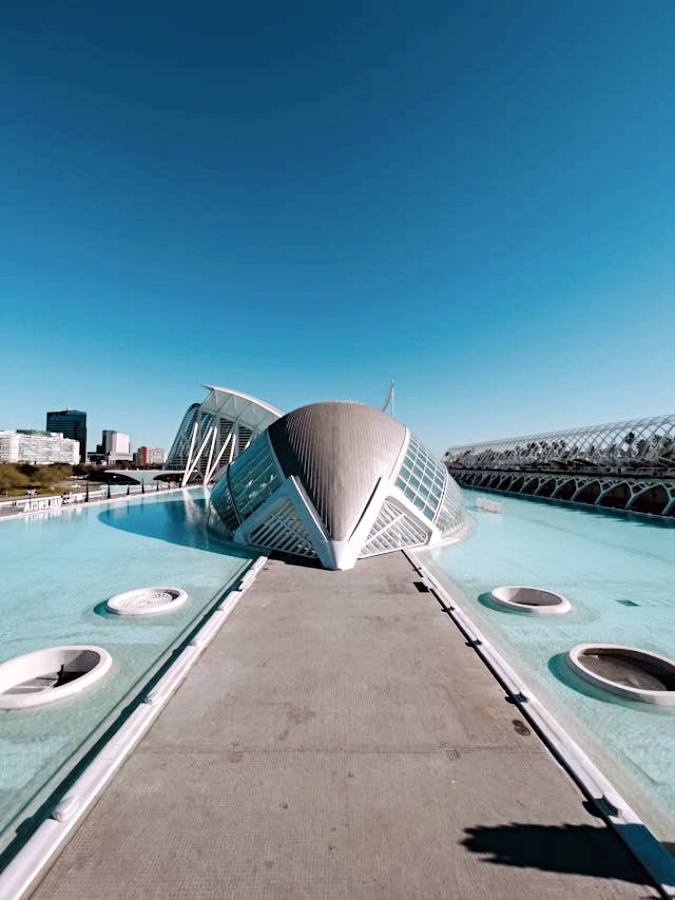
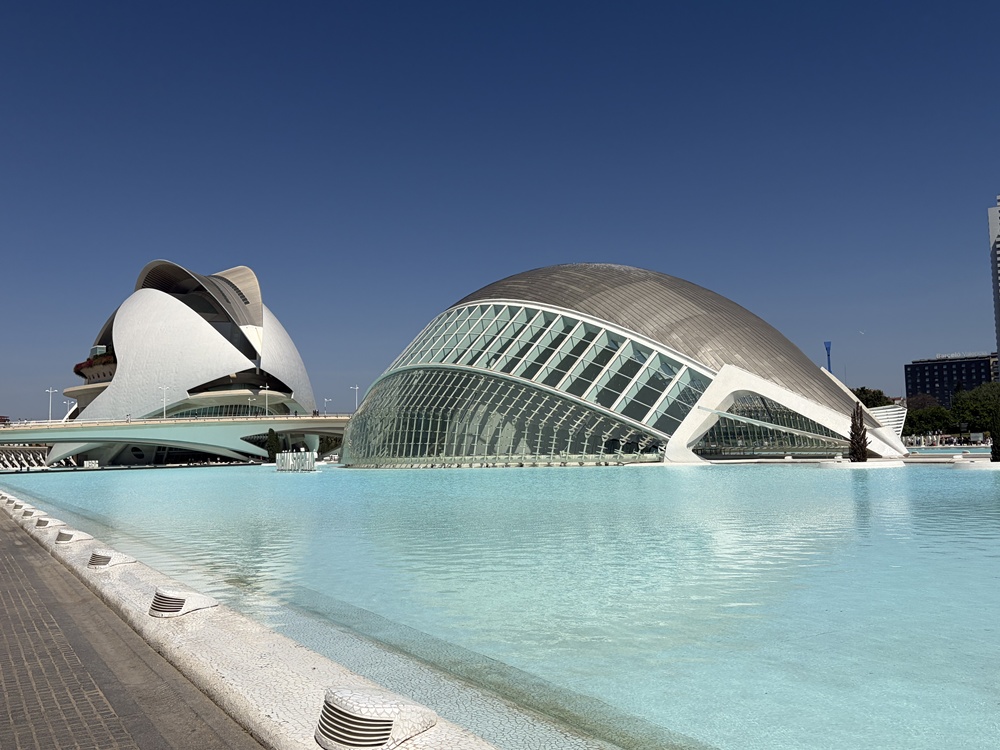
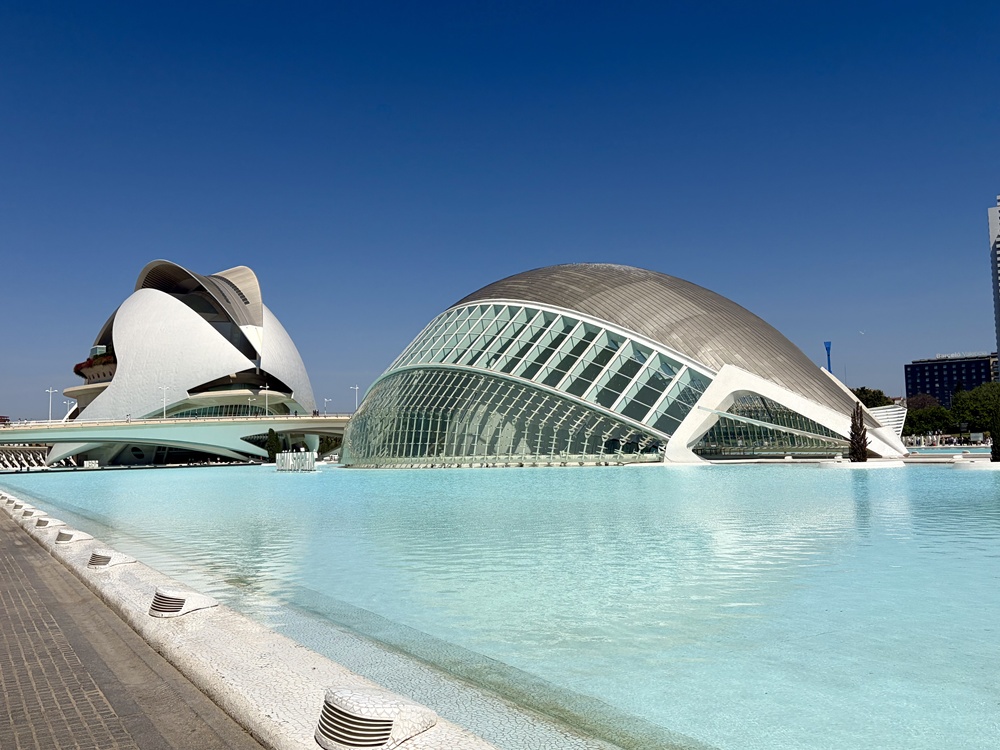
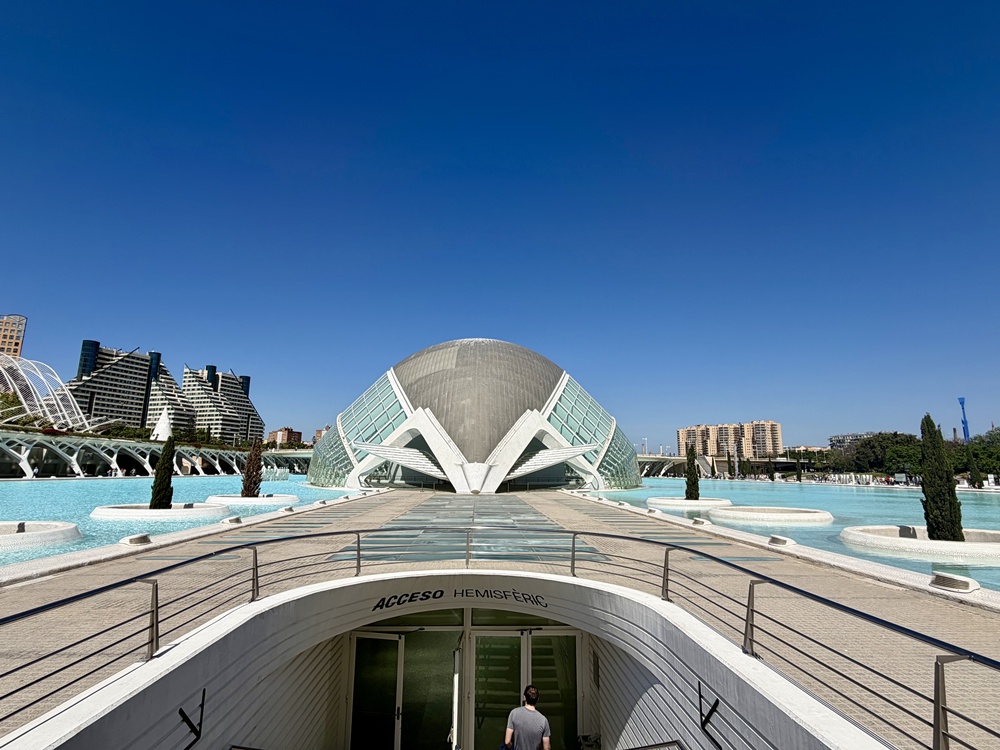
Opened in 1998, the Hemisfèric was the first completed building of the City of Arts and Sciences.
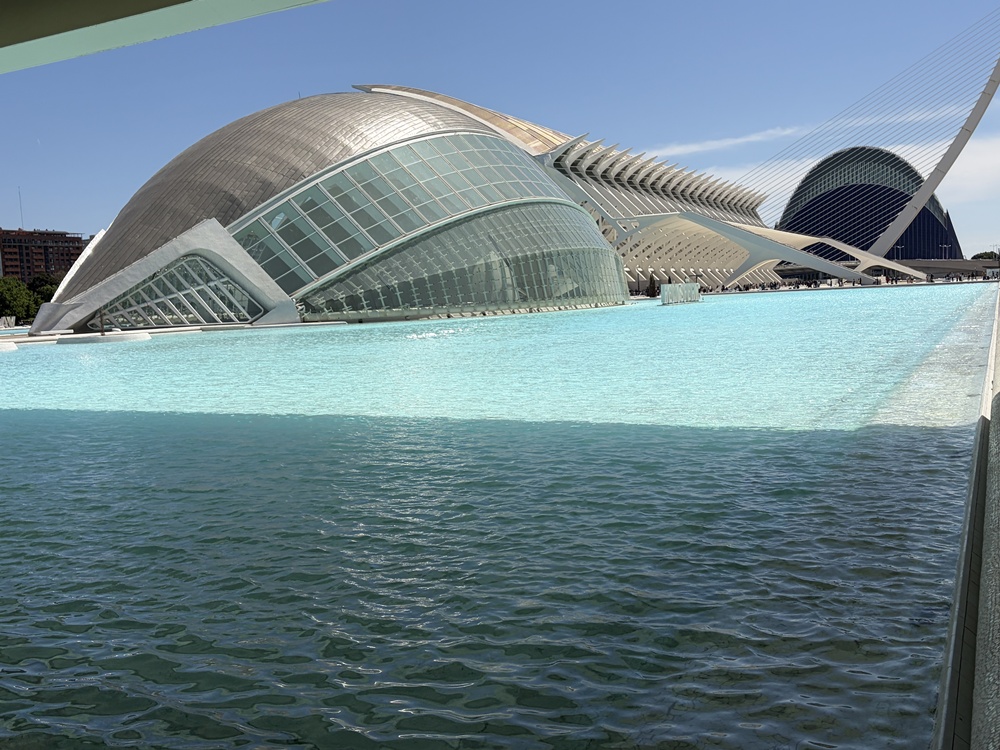
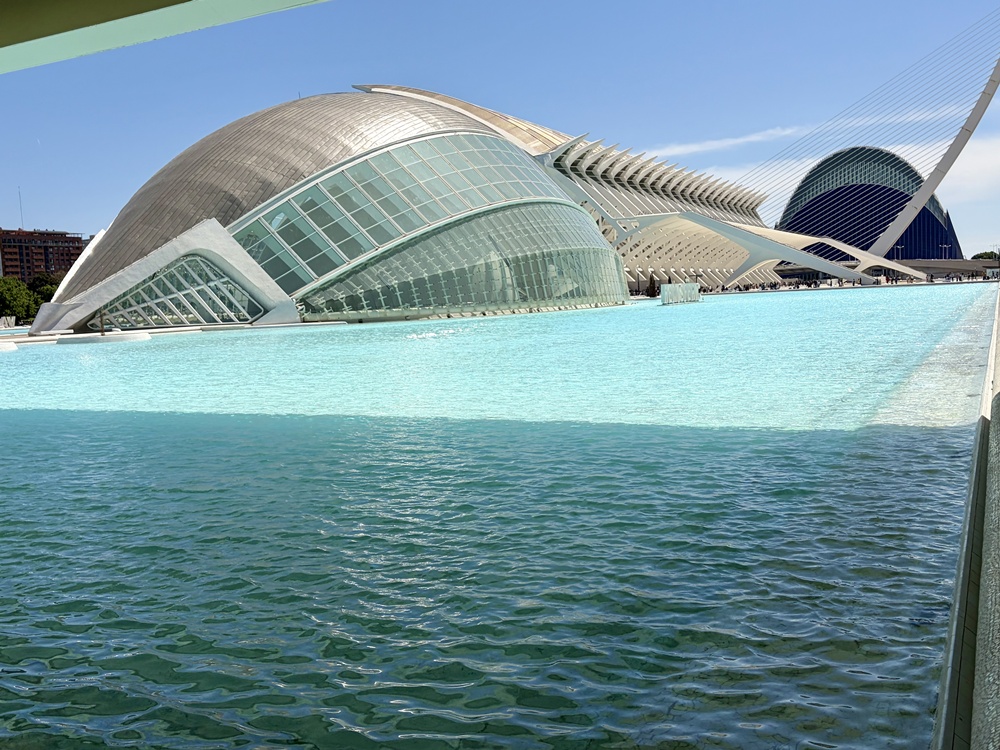
Its architectural design resembles a gigantic human eye. Together with its reflection in the surrounding water, the building creates the impression of a fully opened eye.
Inside, visitors will find a large-format cinema with a dome-shaped projection screen.
The programme includes films and documentaries covering nature, science, technology, astronomy and space exploration.
Most screenings last approximately 45 to 50 minutes.
As films are shown at scheduled times, visitors should check the programme before organising their itinerary.
Recommended visit duration: approximately 1 hour.
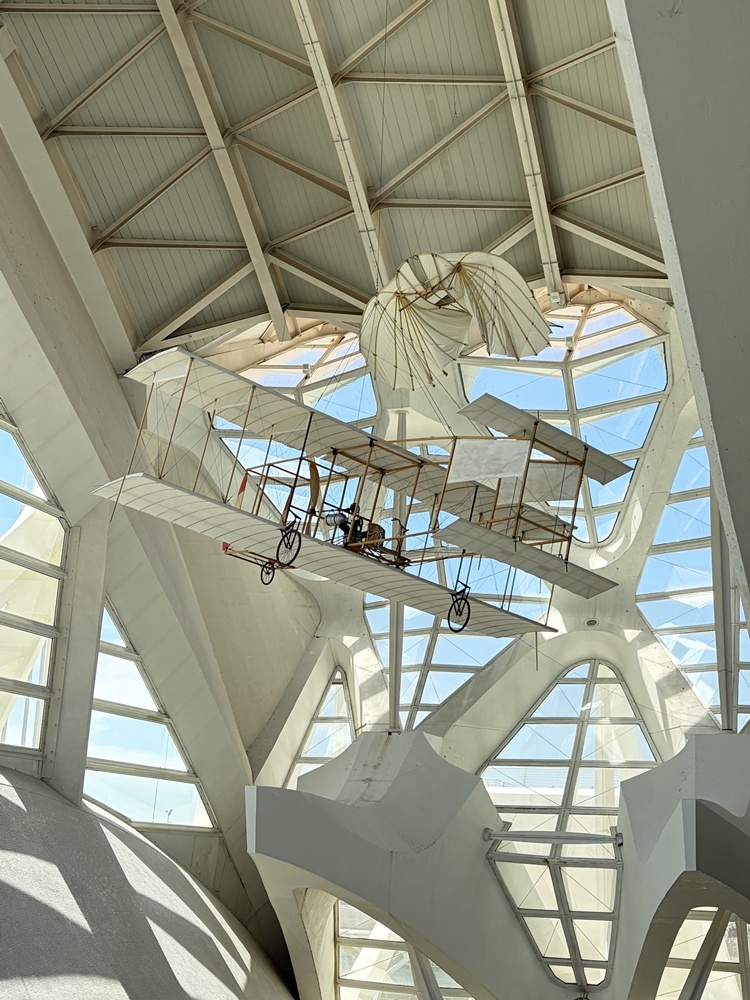
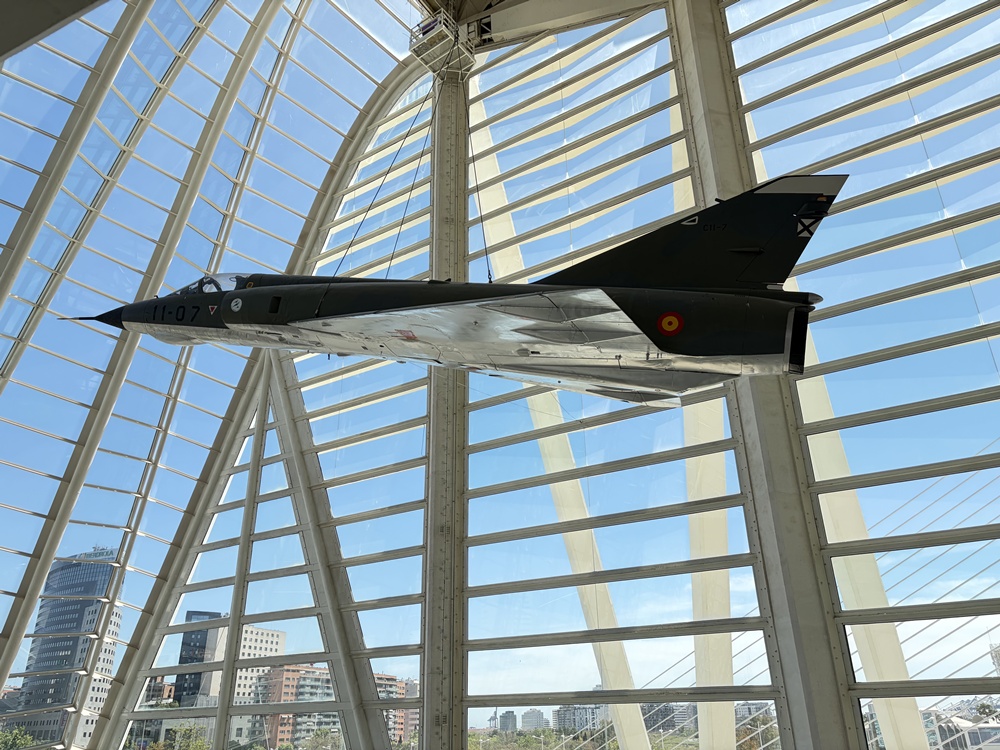
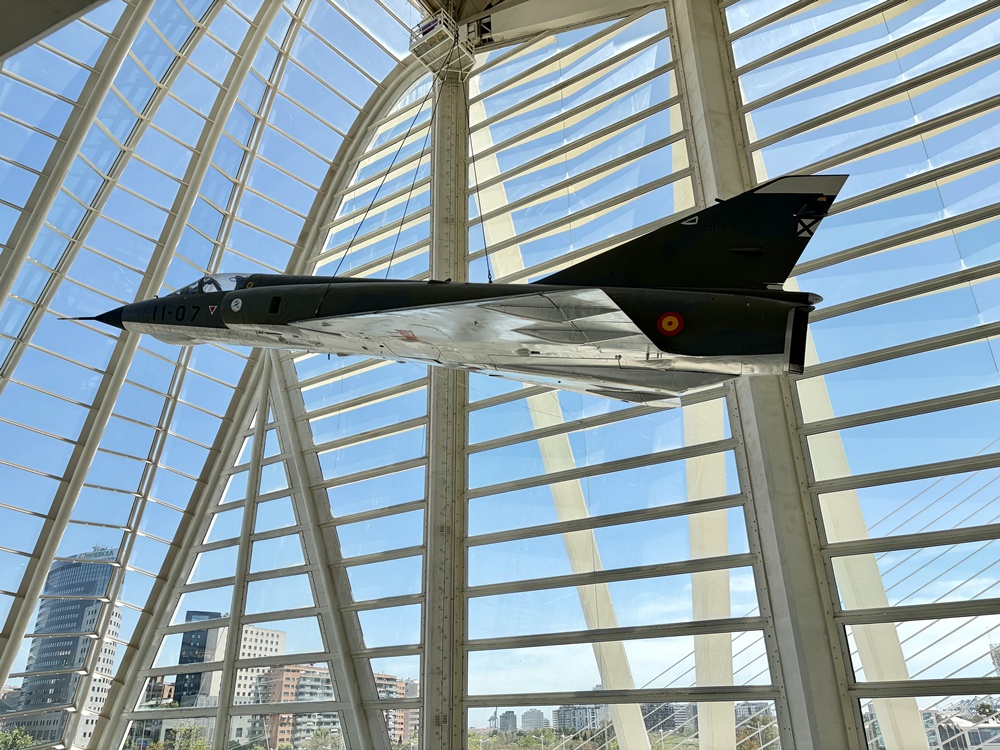
The Príncipe Felipe Science Museum opened in November 2000.
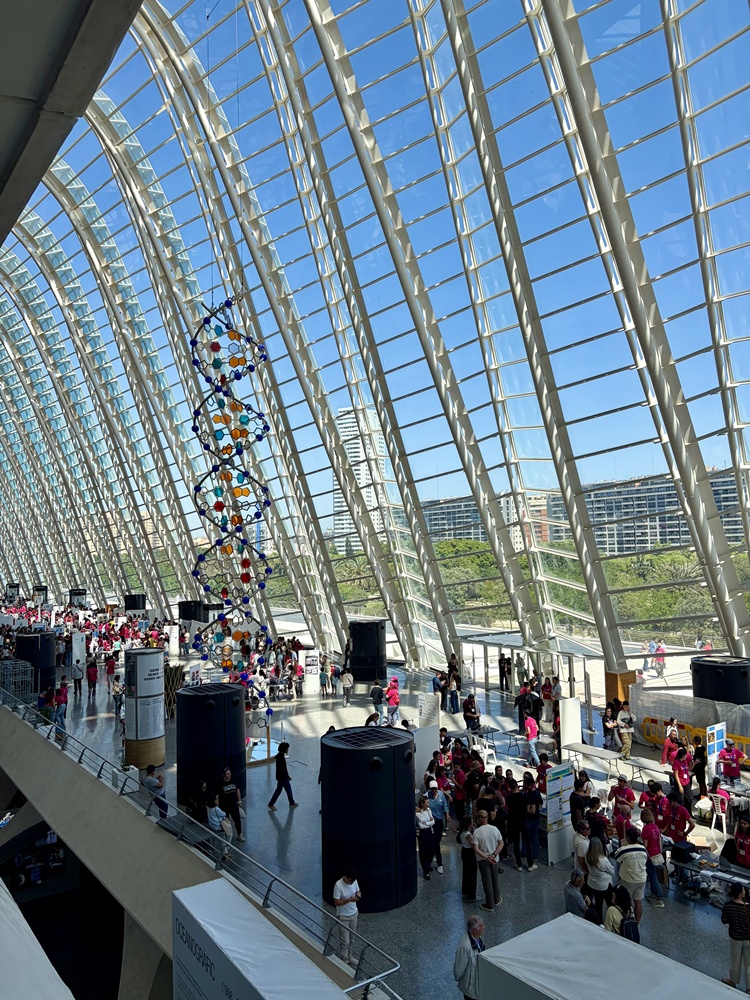
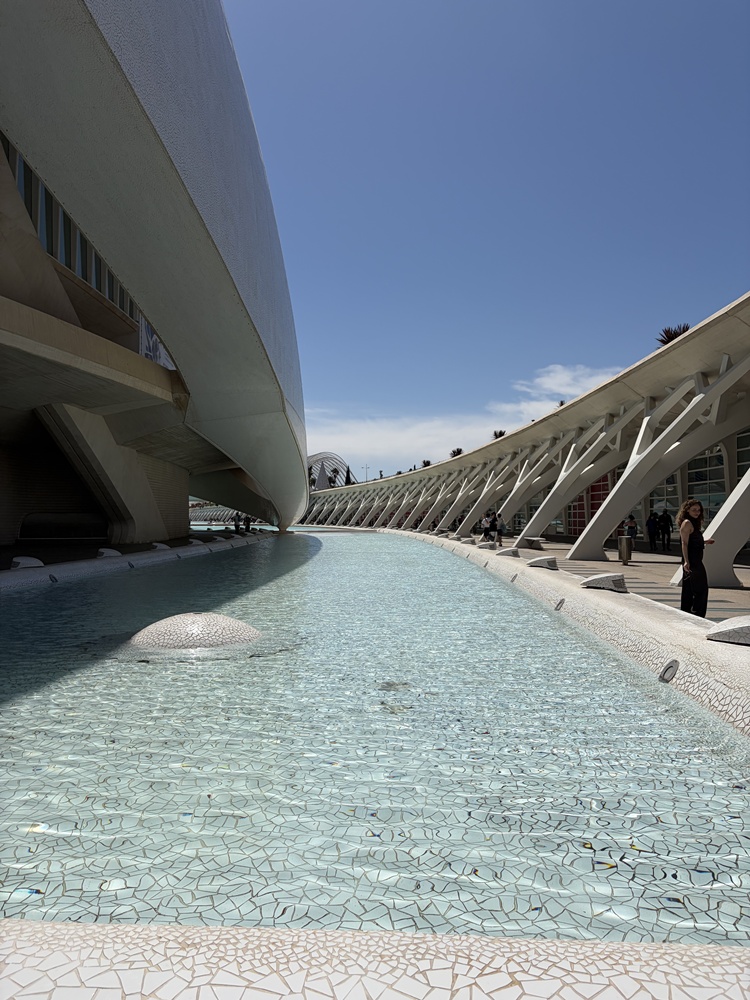
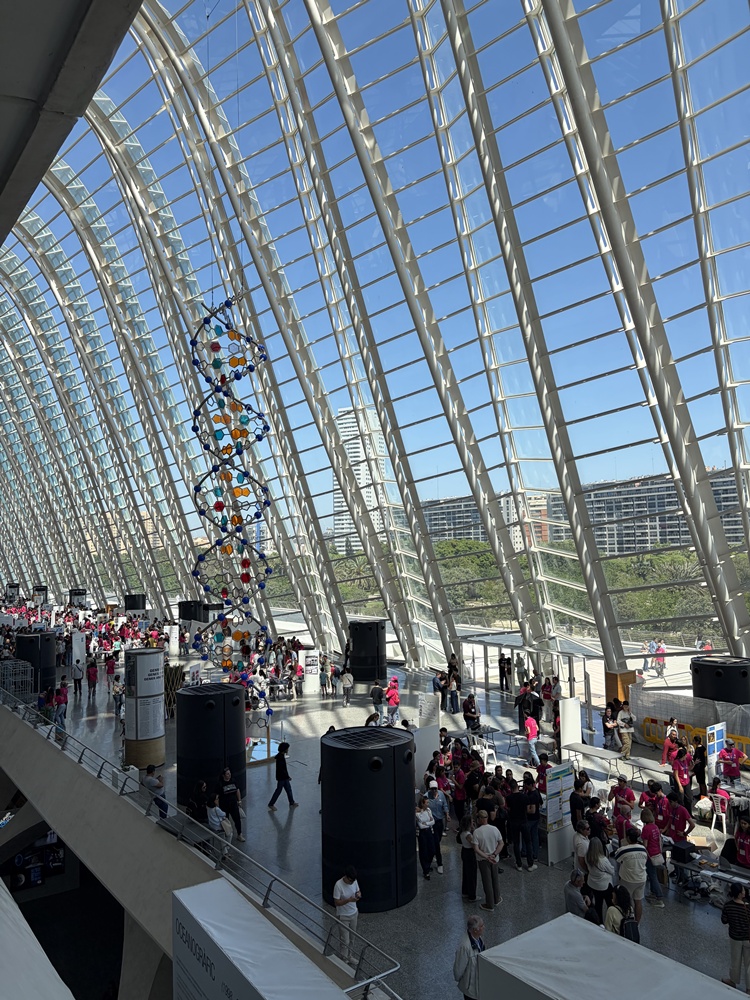
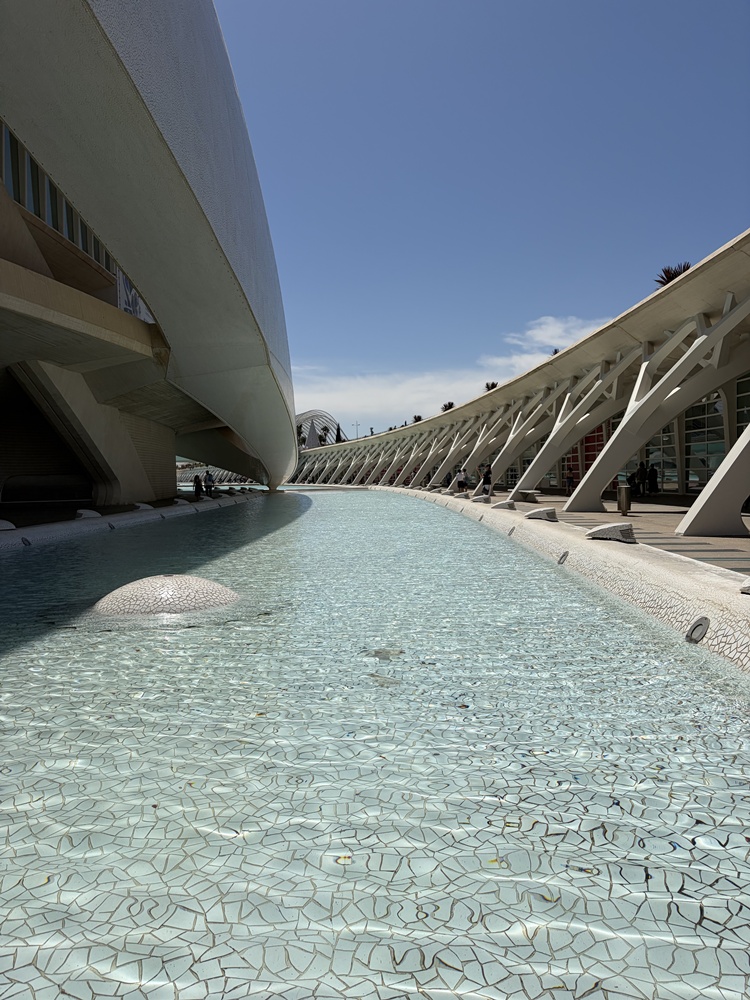
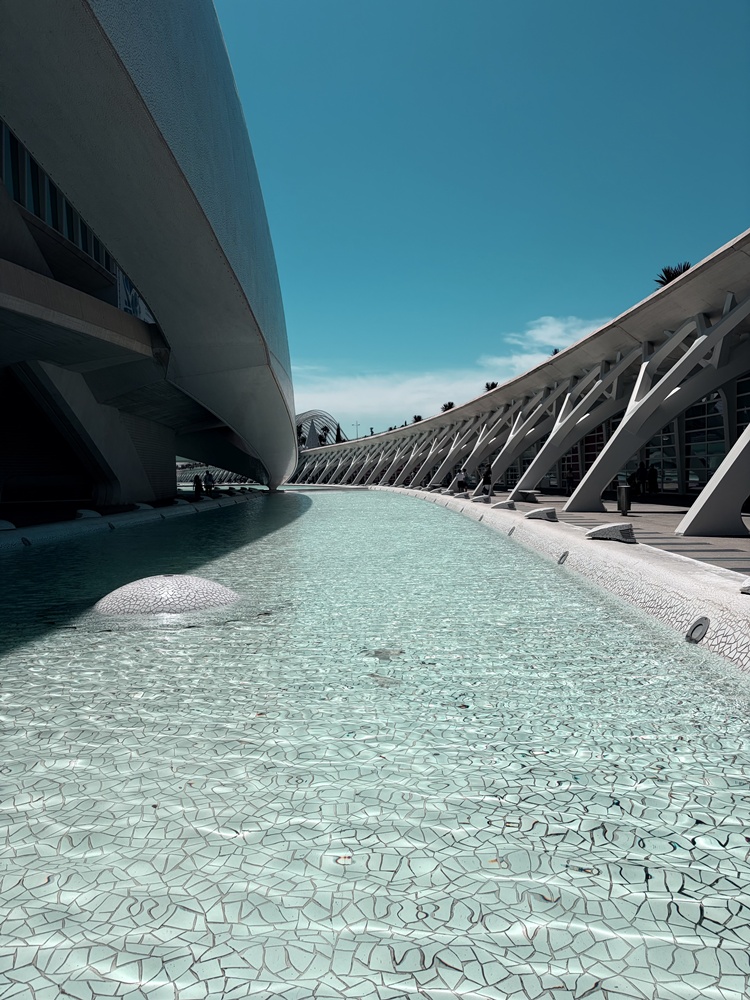
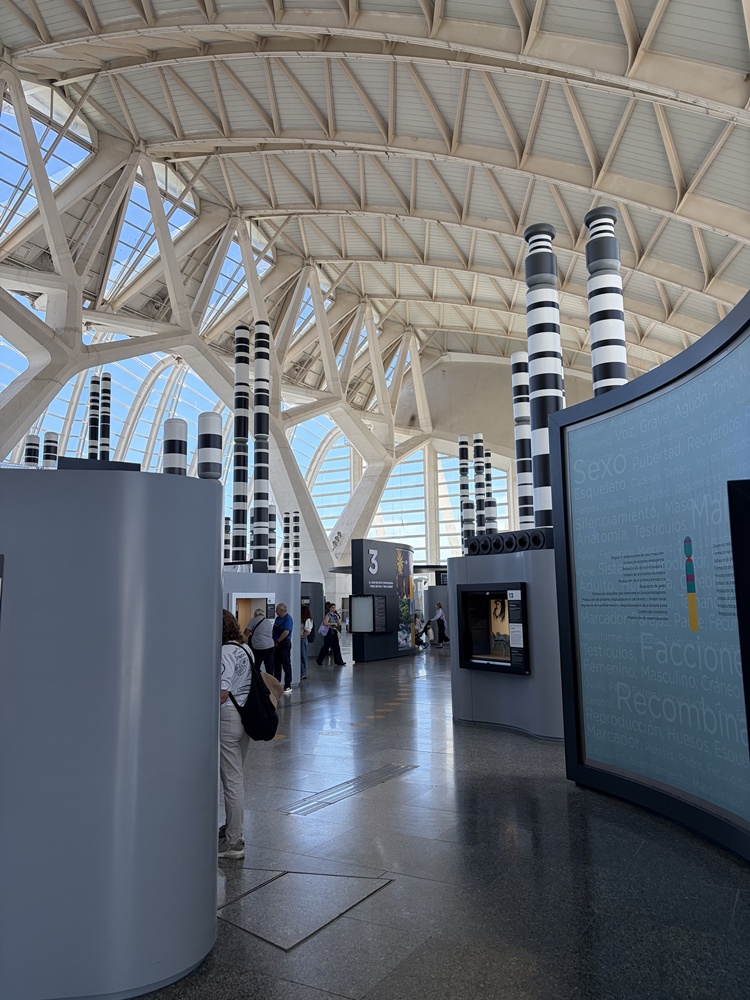
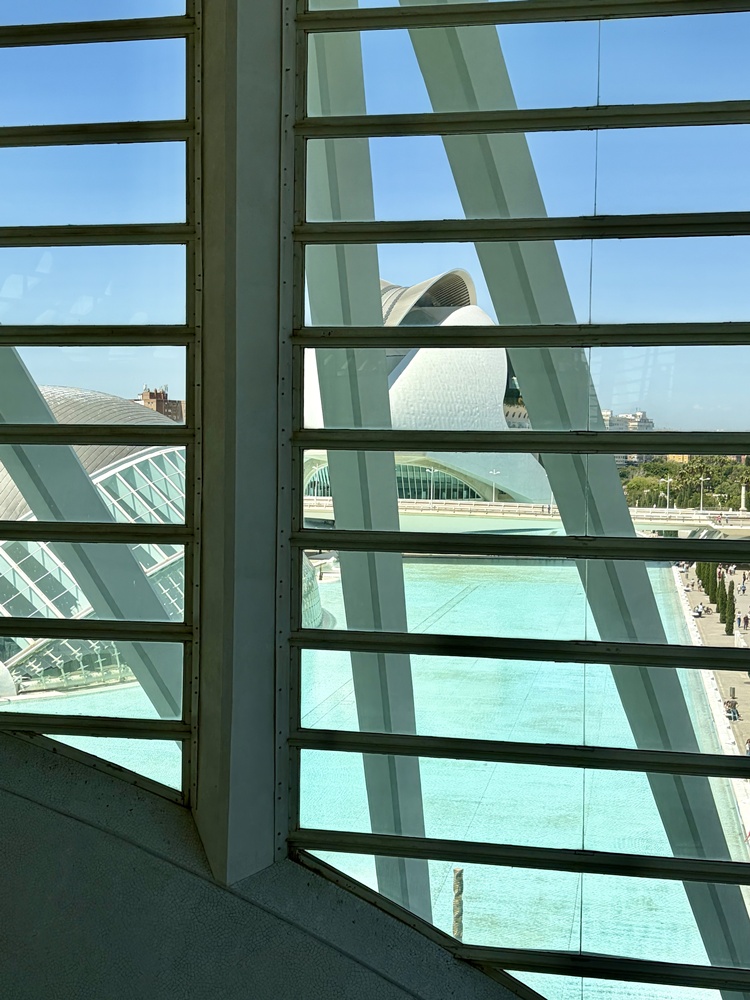
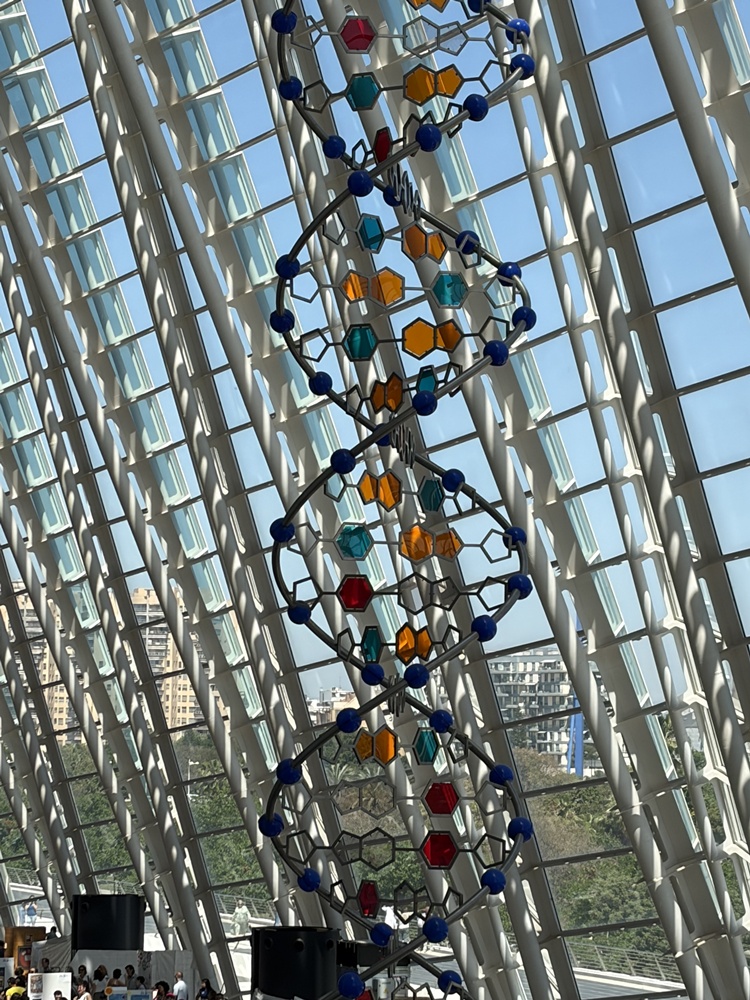
Its elongated structure, characterised by white supporting columns and extensive glass façades, resembles the skeleton of a gigantic living organism.
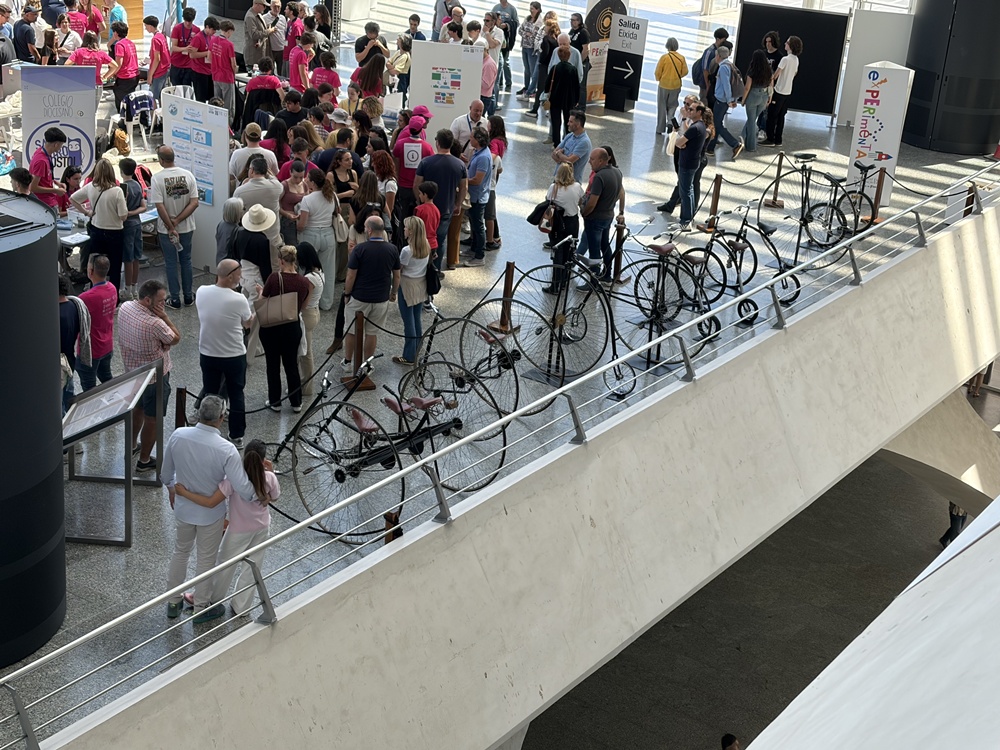
Across several floors, visitors can explore scientific and technological concepts through interactive exhibitions and practical experiments.
Permanent and temporary exhibitions cover subjects such as:
The Science Museum is particularly suitable for families with school-age children and teenagers.
Unlike many traditional museums, its interactive approach encourages visitors to participate, experiment and discover scientific principles for themselves.
Recommended visit duration: 2–3 hours.
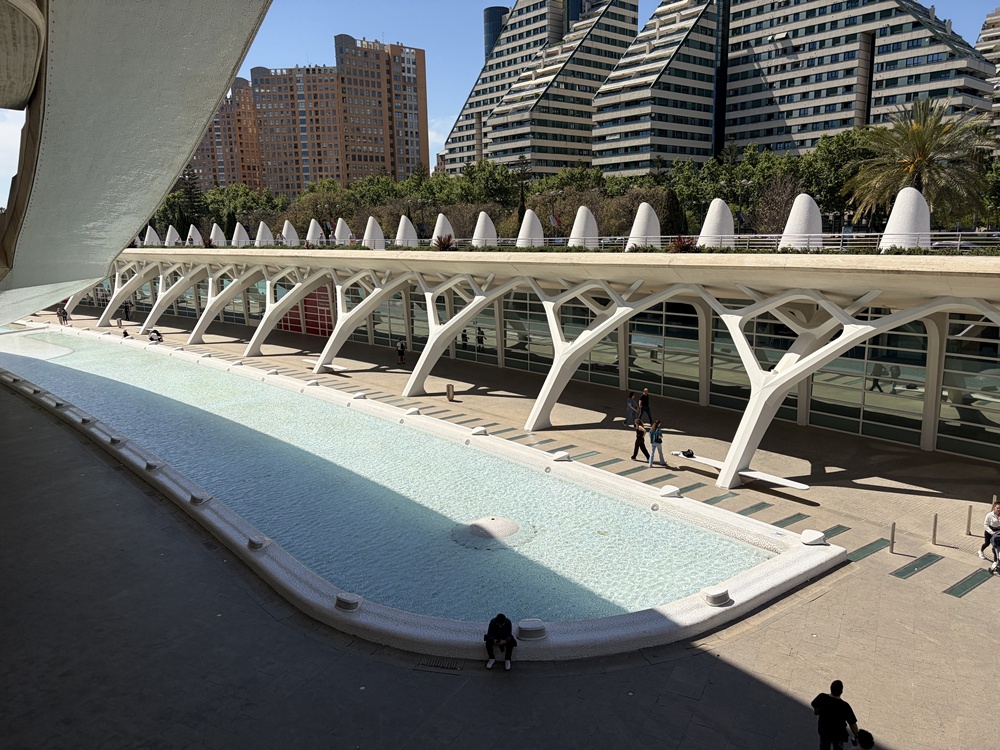
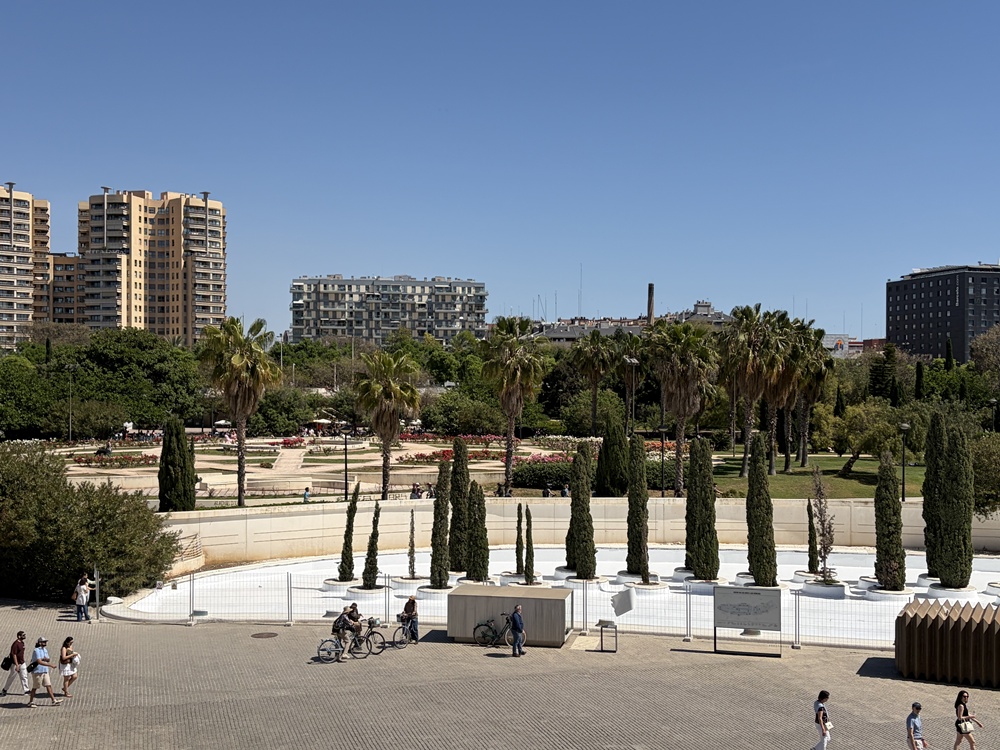
The Umbracle is a publicly accessible landscaped garden and elevated promenade covered by a distinctive series of white arches.
Mediterranean plants, palm trees, sculptures and shaded areas provide an attractive contrast to the futuristic architecture of the surrounding buildings.
From the elevated promenade, visitors can enjoy panoramic views of the Science Museum, the Hemisfèric and the extensive reflecting pools.
One of the complex’s main underground car parks is located beneath the garden.
The Umbracle is also a popular location for architectural photography, relaxing walks and enjoying the surrounding scenery.
Admission: free for regular access to the gardens.
Recommended visit duration: 20–40 minutes.
The Oceanogràfic is one of Spain’s best-known tourist attractions and the largest aquarium in Europe.
Since opening to the public in February 2003, visitors have been able to discover marine ecosystems from numerous regions around the world.
The aquarium recreates environments from the Mediterranean Sea, the Atlantic and Pacific Oceans, the Arctic, Antarctica and tropical seas.
Its main attractions include:
In addition to its tourism and educational activities, the Oceanogràfic develops projects involving marine research, species conservation and the rehabilitation of injured marine animals.
Due to the extensive size of the complex, visitors should allow several hours to explore its different areas.
Recommended visit duration: 4–5 hours.
Official website: www.oceanografic.org
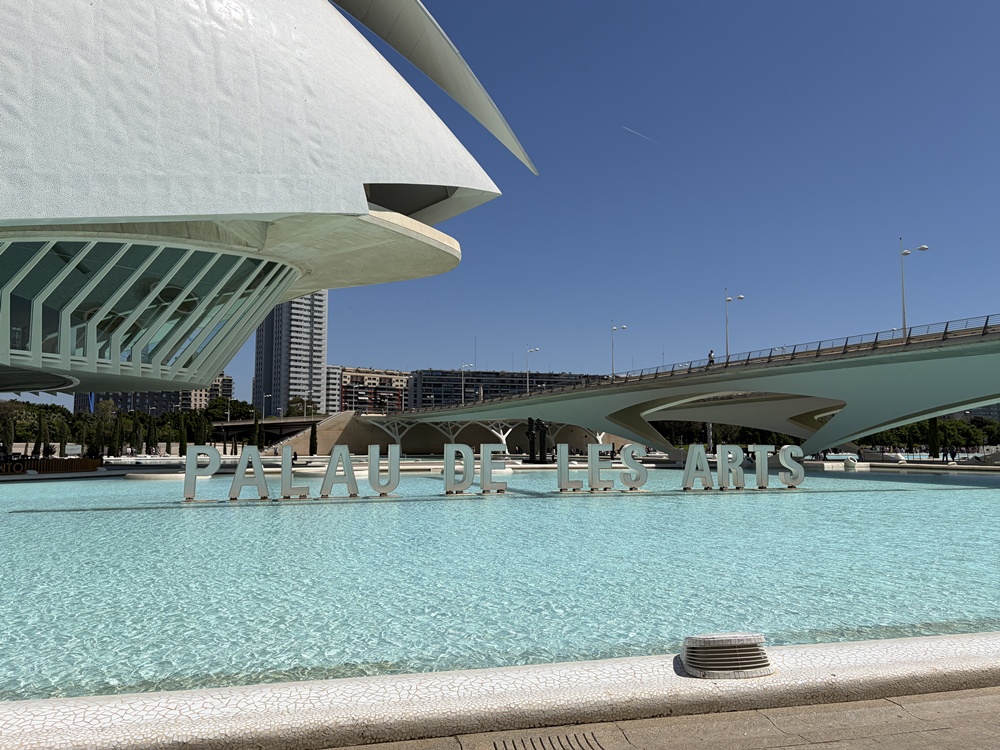
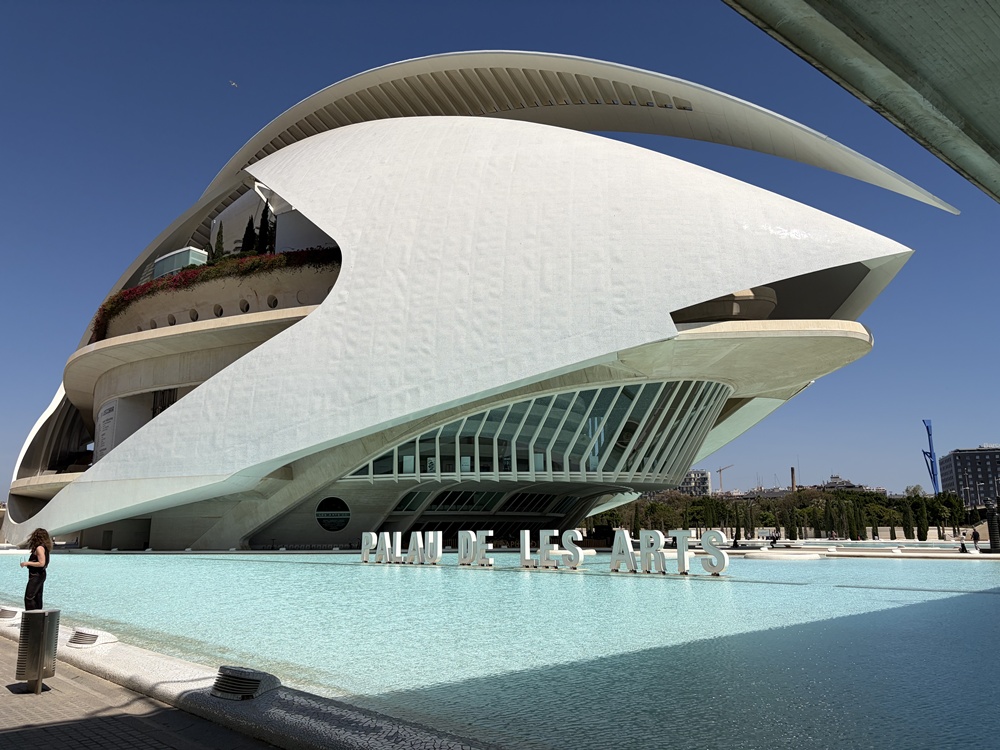
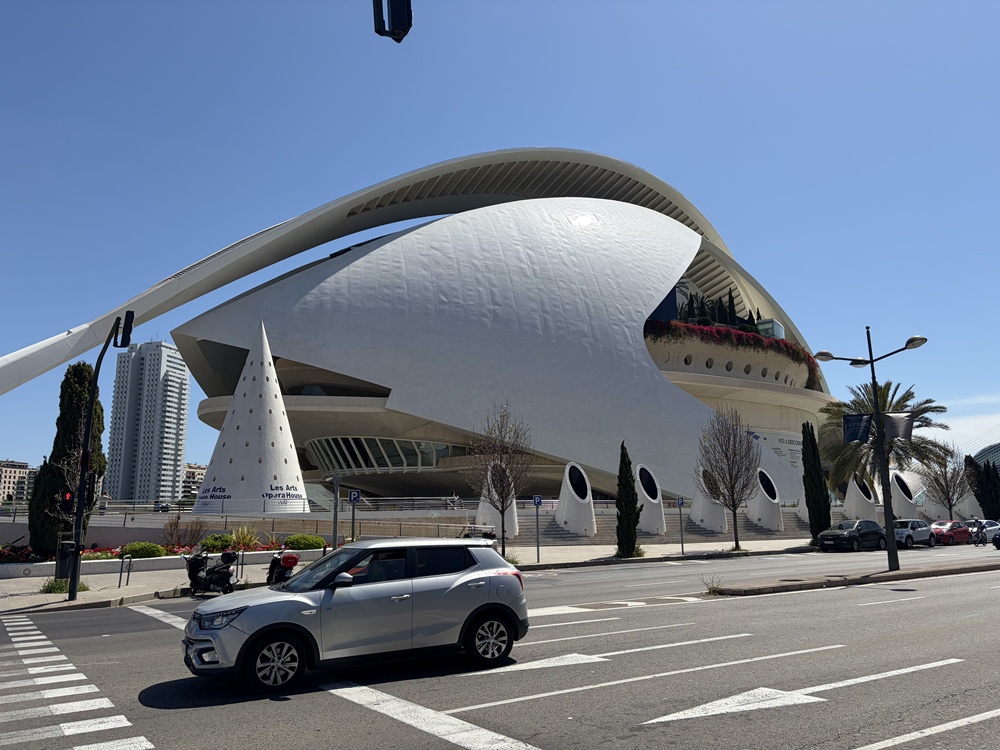
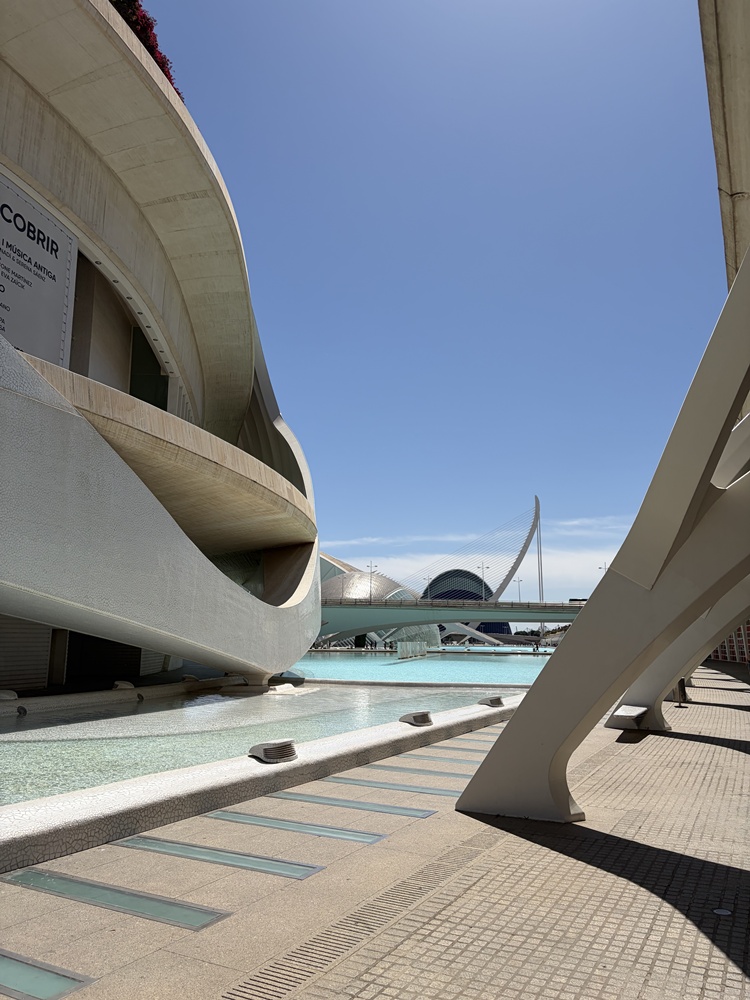
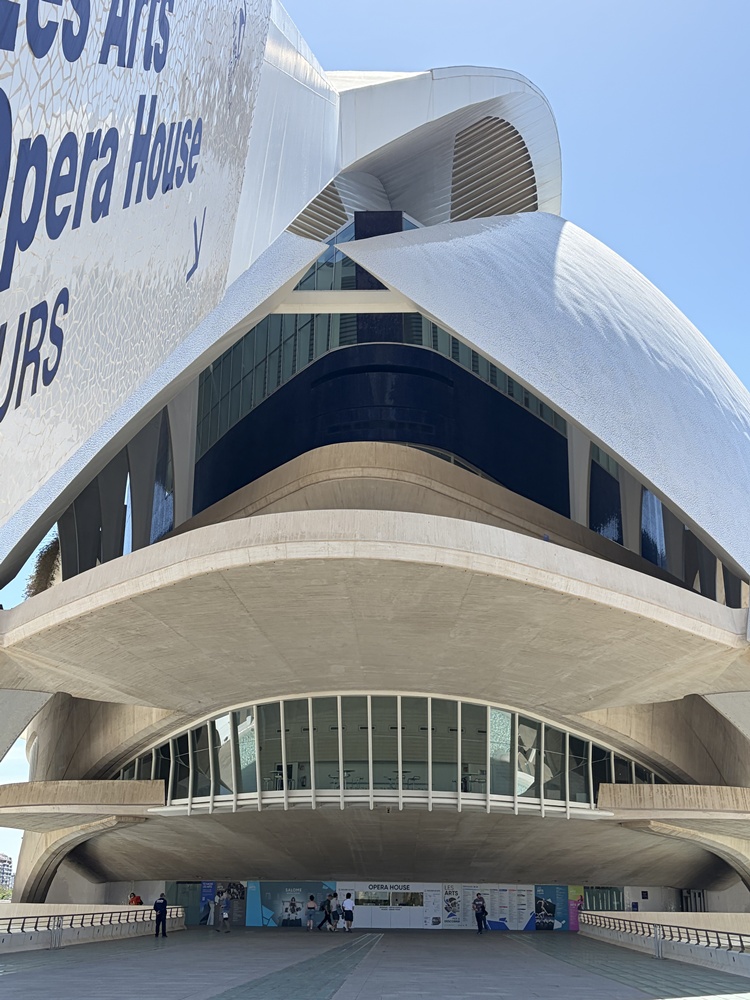
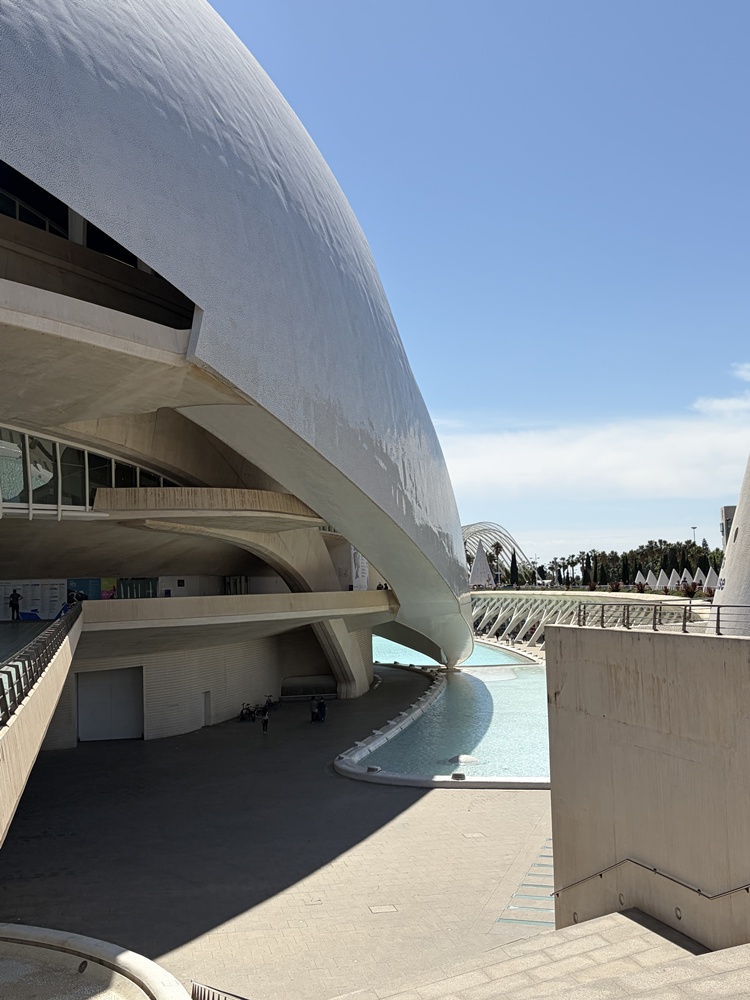
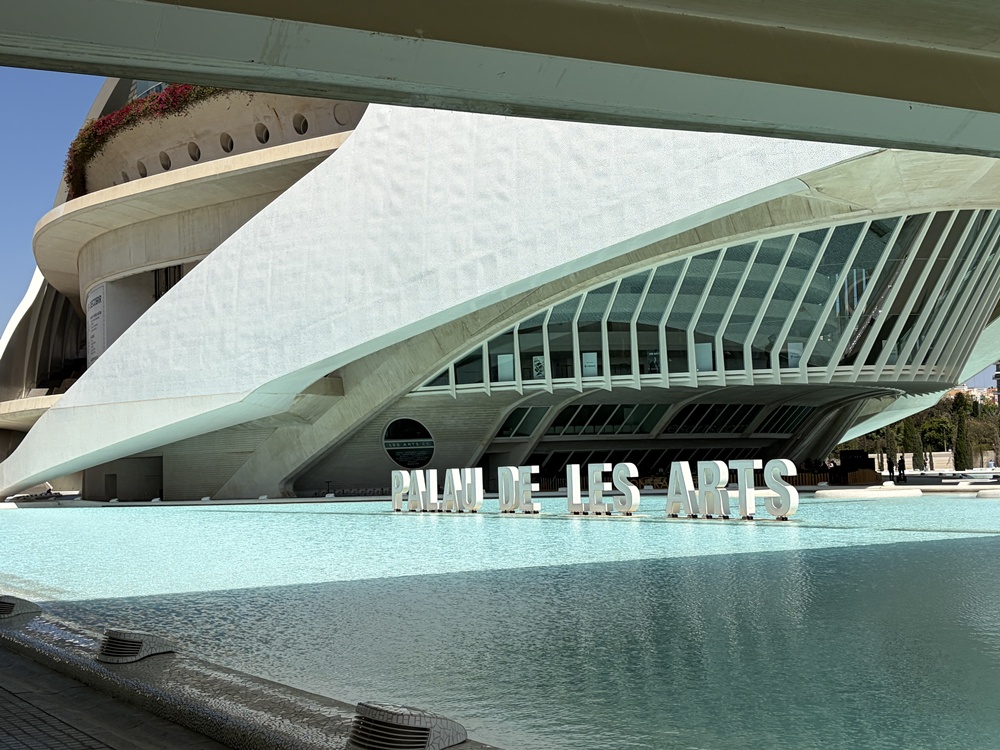
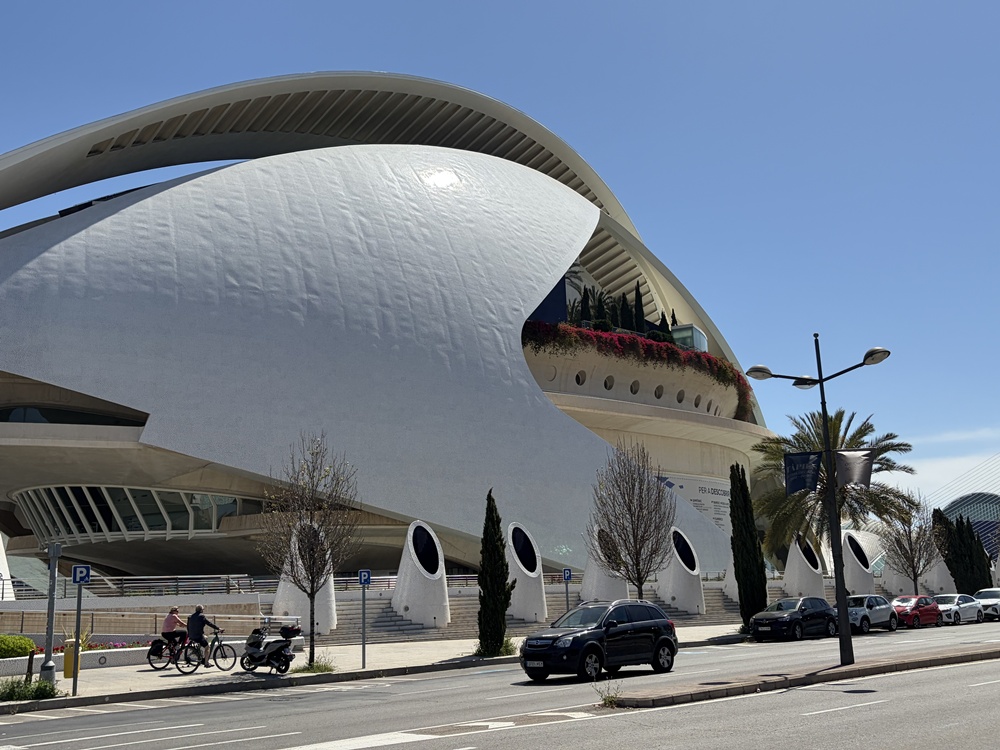
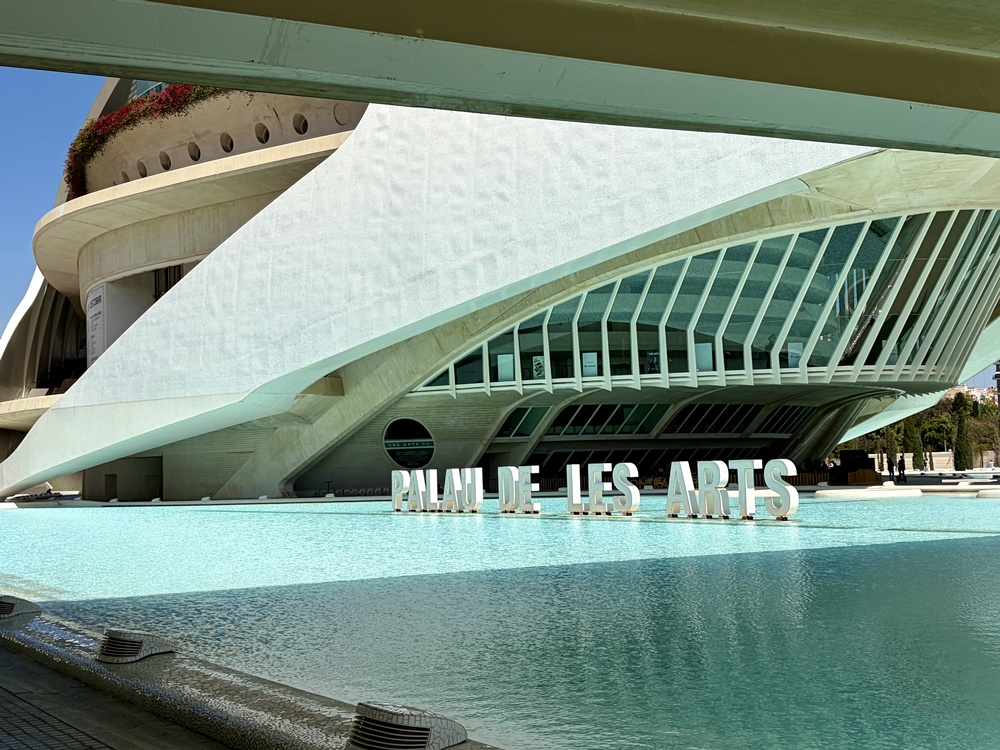
Opened in 2005, the Palau de les Arts Reina Sofía is one of the most architecturally impressive buildings within the City of Arts and Sciences.
Its curved structure resembles a ship, a helmet or a large marine animal, depending on the viewing angle.
The building contains several performance spaces dedicated to opera, classical music concerts and other performing arts.
Visitors interested in architecture, music and theatre can explore the building through a guided tour or attend one of its scheduled performances.
For culture enthusiasts, an evening opera or classical concert provides an excellent conclusion to a day at the City of Arts and Sciences.
Recommended visit duration: approximately 1 hour for a guided tour.
Official website: www.lesarts.com
The Àgora stands out because of its distinctive blue exterior, contrasting with the predominantly white buildings of the surrounding complex.
Designed by Santiago Calatrava and inaugurated in 2009, the building was originally intended to host various events.
Since 2022, it has been home to CaixaForum Valencia.
This cultural centre offers temporary exhibitions and activities covering art, history, science, architecture and contemporary social issues.
It also regularly organises lectures, concerts, educational workshops and activities for adults and children.
CaixaForum Valencia is an interesting addition or alternative to visiting the Oceanogràfic and the Science Museum.
Recommended visit duration: 1–2 hours.
Official website: CaixaForum Valencia
Most outdoor areas of the City of Arts and Sciences can be explored free of charge.
However, separate admission tickets are required for the Oceanogràfic, the Science Museum, Hemisfèric screenings and certain exhibitions or cultural activities.
| Attraction | Approximate admission price |
|---|---|
| Outdoor areas and reflecting pools | Free |
| Umbracle Gardens | Free |
| Hemisfèric | €7–10 |
| Science Museum | €7–10 |
| Oceanogràfic | €31–40 |
| CaixaForum Valencia | Approximately €6 |
| Palau de les Arts | Depends on the tour or performance |
| Combined tickets | Depends on selected attractions and date |
The prices listed are indicative and may vary depending on the season, visitor age, available ticket categories and selected date.
Reduced admission prices may be available for children, senior citizens and other eligible visitor groups.
If you plan to visit several attractions, it is worth comparing combined tickets for the Oceanogràfic, Science Museum and Hemisfèric. These may offer better value than purchasing individual tickets.
Check official ticket prices and book admission tickets
Each attraction has its own opening hours, which may change throughout the year.
The Science Museum and Oceanogràfic generally open from 10:00 am. Extended opening hours may apply during the summer months.
Access to the Hemisfèric depends on its scheduled film screenings, while visits to the Palau de les Arts depend on guided tour availability and scheduled performances.
The outdoor areas are accessible for much of the day, independently of the opening hours of many individual attractions.
Check current opening hours and admission prices
If you only have one day to visit the City of Arts and Sciences, it is advisable to plan your itinerary in advance and select the attractions that interest you most.
The following itinerary is particularly suitable for families with children and first-time visitors to Valencia.
Start your day with a walk through the Umbracle Gardens, alongside the reflecting pools and futuristic buildings.
During the early morning hours, the complex is often less crowded, making it an excellent time to enjoy the surroundings and take photographs.
Admire the exterior of the Palau de les Arts and the Hemisfèric before continuing to the Oceanogràfic.
Continue your day with the largest attraction of the complex.
Explore the underwater tunnels, tropical aquariums and marine environments of the Arctic and Antarctica.
If you would like to attend a dolphin presentation, check the daily programme when you arrive.
A comprehensive visit to the Oceanogràfic usually requires four to five hours. With a one-day itinerary, you may need to prioritise the areas that interest you most.
There are restaurants, cafés and snack bars within the complex and in the surrounding neighbourhoods.
Take the opportunity to discover Valencian cuisine, including traditional paella and other regional rice dishes.
Spend the afternoon discovering the Museu de les Ciències.
The interactive exhibitions allow visitors to explore scientific phenomena and learn about technology, nature and the human body.
Due to the size of the museum, it is advisable to select the exhibitions that are most interesting to your group.
A film screening at the Hemisfèric provides an enjoyable conclusion to the indoor attractions.
The exact time depends on the available screenings on your chosen date.
Advance booking is recommended.
If no suitable screening is available, consider visiting CaixaForum Valencia instead, provided its opening hours allow sufficient time.
Finish your day with another walk around the reflecting pools and iconic buildings.
As daylight fades, the illuminated architecture and reflections create a particularly impressive atmosphere.
Afterwards, enjoy dinner at one of Valencia’s many restaurants.
| Time | Activity |
|---|---|
| 9:00 am | Umbracle Gardens and architecture |
| 10:00 am | Oceanogràfic |
| 1:30 pm | Lunch break |
| 2:30 pm | Science Museum |
| 5:15 pm | Hemisfèric |
| 6:15 pm | Sunset walk and photography |
| Evening | Dinner in Valencia |
This itinerary is a suggested schedule and should be adapted to the actual opening hours and available film screenings on your chosen date.
If you are spending several days in Valencia, it is worth dividing your visit to the City of Arts and Sciences into two separate days.
This allows you to explore the main attractions without rushing and provides more time to enjoy the exhibitions, architecture and outdoor spaces.
| Time | Activity |
|---|---|
| 9:30 am | Architectural walk and photography |
| 10:00 am | Visit the Oceanogràfic |
| 1:00 pm | Lunch break |
| 2:00 pm | Continue exploring the Oceanogràfic |
| 4:00 pm | Visit CaixaForum Valencia |
| 6:00 pm | Walk around the outdoor areas |
| Time | Activity |
|---|---|
| 9:30 am | Walk through the Turia Gardens |
| 10:00 am | Visit the Science Museum |
| 1:00 pm | Lunch |
| 2:30 pm | Film screening at the Hemisfèric |
| 4:00 pm | Guided tour of the Palau de les Arts |
| 5:30 pm | Umbracle Gardens and panoramic viewpoints |
| Evening | Optional opera or classical concert |
The suggested times should be adjusted according to opening hours, film schedules, guided tours and available performances.
You do not need to purchase admission tickets to enjoy the spectacular architecture of the City of Arts and Sciences.
Much of the complex is freely accessible and provides one of the most impressive locations for walking and photography in Valencia.
Free attractions and highlights include:
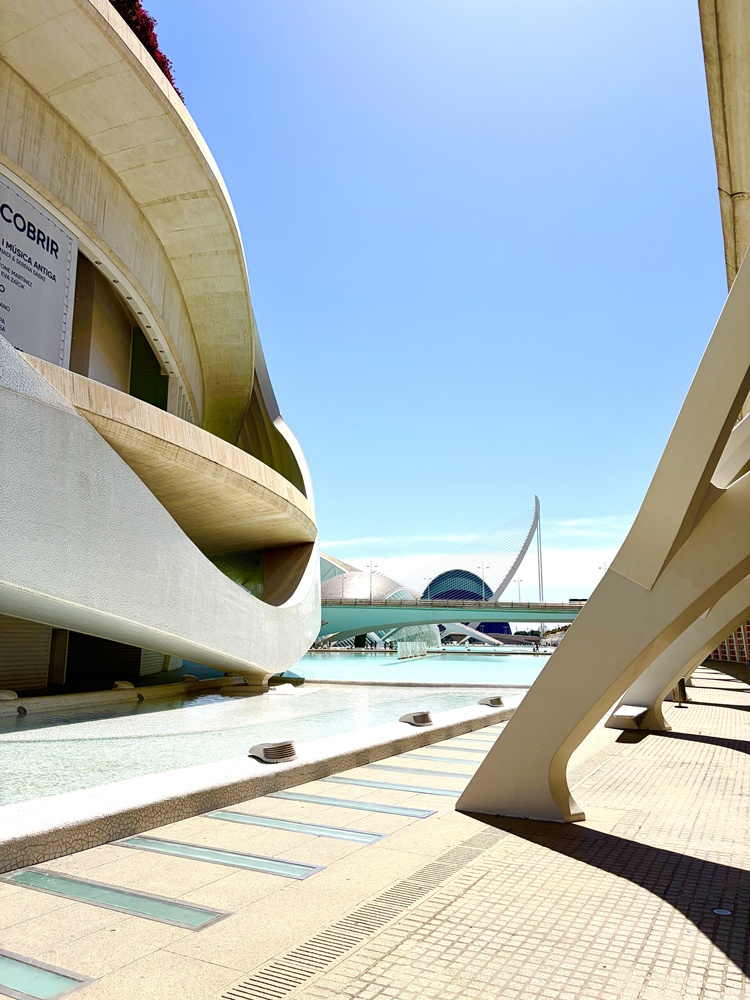
The exterior of the Palau de les Arts Reina Sofía.
The Hemisfèric and its reflection in the surrounding water.
The Umbracle Gardens and panoramic viewpoints.
The promenade alongside the Science Museum.
The Assut de l’Or Bridge.
The distinctive exterior of the Àgora.
The extensive reflecting pools and outdoor spaces.
The connection to the Turia Gardens.
Allow approximately one to two hours for a free architectural walking tour of the complex.
The City of Arts and Sciences is one of the best destinations for a family day out in Valencia.
Younger children are often particularly fascinated by the marine animals at the Oceanogràfic, while the Science Museum offers numerous educational and interactive activities for school-age children and teenagers.
For families, a combination of the Oceanogràfic and Science Museum is especially recommended.
Visitors travelling with younger children should avoid trying to explore every attraction in a single day.
The complex is extensive and involves considerable walking. During the summer months, bring sufficient drinking water, sun protection and plan regular breaks.
A pushchair may also be useful for families travelling with small children.
The City of Arts and Sciences is located southeast of Valencia’s historic city centre, at the eastern end of the former Turia riverbed.
The complex is easily accessible from the city centre, the beaches and other neighbourhoods.
Metrovalencia tram line 10 connects central Valencia with the City of Arts and Sciences.
The nearest stops include:
Ciutat Arts i Ciències – Justícia.
Oceanogràfic.
Metrovalencia: current routes and timetables
Several city bus routes connect the City of Arts and Sciences with different neighbourhoods of Valencia.
Current routes, connections and timetables can be found on the official website of Valencia’s municipal transport company.
EMT Valencia: bus routes and timetables
One of the most enjoyable ways to reach the City of Arts and Sciences is by cycling through the Turia Gardens.
The former riverbed connects several areas of Valencia through a route that is largely separated from motorised traffic.
This makes it possible to combine a visit to the City of Arts and Sciences with a cycling tour through one of Spain’s most impressive urban parks.
Visitors arriving by car can use the paid underground car parks at the Umbracle or Oceanogràfic.
As a general guide, parking rates may be approximately €2.30 per hour.
Under certain conditions, visitors holding valid admission tickets may qualify for discounted daily parking rates starting at approximately €7.
Check the current parking conditions before your visit.
Ciudad de las Artes y las Ciencias
Avenida del Professor López Piñero, 7
46013 Valencia, Spain
Telephone: +34 961 974 686
Official website: www.cac.es
Find the City of Arts and Sciences on Google Maps
The City of Arts and Sciences can be visited throughout the year.
Spring and autumn are particularly pleasant seasons, as temperatures are generally milder and conditions are ideal for exploring the outdoor areas.
During the summer months, temperatures in Valencia can be considerably higher.
It is therefore advisable to explore the outdoor spaces early in the morning or towards sunset and spend the hottest part of the day inside the air-conditioned buildings.
Even on rainy days, the Oceanogràfic, Science Museum, Hemisfèric and CaixaForum offer numerous indoor activities, although some walking between attractions takes place outdoors.
A visit to the City of Arts and Sciences can easily be combined with other popular attractions in Valencia.
Recommended places to explore include:
Turia Gardens.
Gulliver Park.
Valencia’s historic Old Town.
Central Market of Valencia.
Valencia Cathedral and the Miguelete Tower.
La Lonja de la Seda.
Ruzafa neighbourhood.
El Cabanyal neighbourhood.
Malvarrosa Beach.
Valencia Marina.
Visitors spending several days in Valencia can combine the contemporary architecture of the City of Arts and Sciences with the historic buildings of the Old Town and a relaxing day on the Mediterranean coast.
Discover more attractions, activities, accommodation options and travel recommendations on Portal Valencia.
Approximately one to two hours are sufficient for exploring the outdoor areas. Visitors wishing to explore the Oceanogràfic, Science Museum and additional attractions should allow at least one full day, ideally two days.
Yes. Most outdoor areas and the Umbracle Gardens are freely accessible. Admission tickets are required for the Oceanogràfic, Science Museum, Hemisfèric and other indoor attractions.
There is no single admission fee for the entire complex. Individual tickets for some attractions cost approximately €7–10, while adult admission to the Oceanogràfic may range from €31 to €40.
Most of the complex was designed by Valencian architect and structural engineer Santiago Calatrava. Félix Candela contributed particularly to the architectural design of the Oceanogràfic.
The Oceanogràfic is one of the most popular attractions. The interactive Science Museum is also highly recommended for families. Architecture enthusiasts can enjoy many impressive buildings without purchasing admission tickets.
Yes. With careful planning, it is possible to combine the Oceanogràfic, Science Museum and Hemisfèric in one day, provided their schedules are compatible. However, two or more days are recommended for a comprehensive visit.
Yes. Paid car parks are available at both the Umbracle and Oceanogràfic.
Yes. Individual and combined admission tickets can be purchased through the official website. Booking in advance is particularly recommended during weekends, public holidays and school holidays.